Specifications:
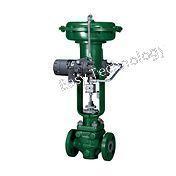
Model: FB Pressure Regulator
Type: Pilot-Operated
Functions: Pressure Reducing, Backpressure, Relief
Sizes & Connections:
Valve Size: 1" to 8" (DN 25 to DN 200)
Pressure Class: ANSI 125 through 600
End Connections: Flanged (RF, RTJ)
Performance & Ratings:
Pressure Rating: Dependent on body class (e.g., for ANSI 150: 275 psi; for ANSI 300: 720 psi).
Temperature Range: -20° to 450°F (-29° to 232°C) [Standard; special packs extend range]
Set Pressure Range: Varies widely based on the specific pilot and spring used.
Accuracy: High, with droop as low as 2-5% of the set point depending on the pilot.
Pilot Options:
Proportional Pilot: Standard for most pressure reducing and backpressure applications.
Blind Pilot: For applications where the pilot does not need to sense a remote signal.
Solenoid Stop Pilot: Allows for remote shutoff of the regulator.
Dome-Loaded Pilot: For very precise set point control using an external air supply.
Materials of Construction:
Body: Carbon Steel (WCB) [Standard], Stainless Steel (CF8/CF8M), Ductile Iron.
Trim (Plug, Seat): 316 Stainless Steel (standard), with optional hardened trim for erosive service.
Diaphragm: Nylon-reinforced elastomer.
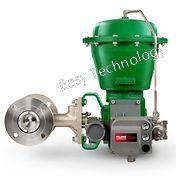
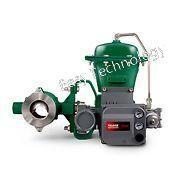
Specifications:
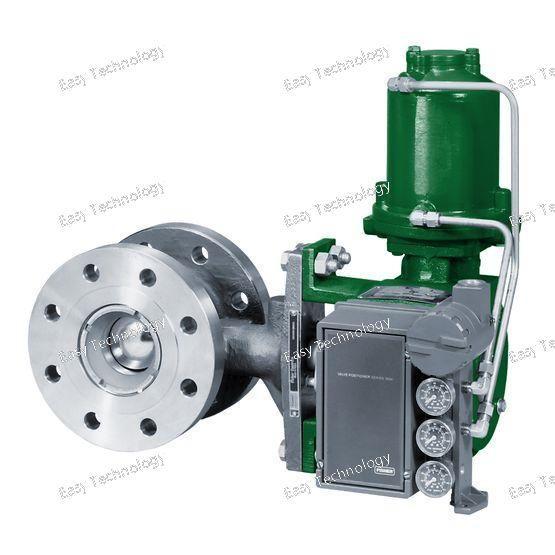
Valve Size: 1/2" to 2" (DN 15 to DN 50)
End Connections: NPT (National Pipe Taper)
Pressure Rating: 275 PSIG (19 bar) @ 100°F (38°C)
Temperature Range: -20° to 400°F (-29° to 204°C) [Dependent on seat material]
Performance & Flow Characteristics:
Shut-Off Class: ANSI Class VI (Bubble-tight)
Flow Characteristic: Equal Percentage (inherent)
Rangeability: Up to 100:1
Flow Coefficient (Cv): Ranges from approximately 5 to 50, depending on valve size and V-notch angle.
Materials of Construction:
Body: 316 Stainless Steel (standard), Carbon Steel
Ball: 316 Stainless Steel
Shaft: 316 Stainless Steel
Seat: RPTFE (Reinforced PTFE)
Actuator & Accessories:
Actuator Types: Compatible with a wide range of compact Fisher and other rotary actuators due to its low torque.
Pneumatic: Fisher 1051/1052 SRD (small sizes), Fisher 1053/1054, and other compact piston actuators.
Electric: Electric Motor Actuators.
Positioner: A Fisher FIELDVUE™ DVC6000 or other compact positioner can be mounted for precise modulating control.
Specifications:
Model: 2100 Safety Relief Valve
Type: Conventional Spring-Loaded, Full Nozzle
Design Standard: ASME Boiler and Pressure Vessel Code, Section VIII
Sizes & Connections:
Valve Size (Inlet): 1" x 2" through 4" x 6" (common inlet x outlet sizes)
Orifice Designations: D through T (per ASME/API standards)
End Connections: Flanged (RF, RTJ) standard. Other connections available.
Pressure Class: ANSI 150 through 2500
Performance & Ratings:
Set Pressure Range: Varies by spring and valve design, typically from around 15 psig to over 1000 psig.
Temperature Range: -20° to 800°F (-29° to 427°C) [Dependent on materials]
Overpressure: Standard setting is 3% for steam/gas and 10% for liquid (per ASME code).
Blowdown: Adjustable, typically 2-7%.
Backpressure: Limited built-in backpressure capability. A balanced bellows design is available as an option for applications with significant backpressure.
Materials of Construction:
Body: Carbon Steel (WCB) [Standard], Stainless Steel (CF8/CF8M), Alloy Steels (WC6, WC9).
Nozzle & Disc: Typically 316 Stainless Steel. Hardened trim (Stellite) is available for erosive or high-pressure services.
Spring: Chrome Vanadium Steel.
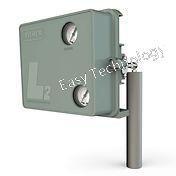
Specifications:
Models: L2 (Single-Acting, for Inlet Control), L2sj (Double-Acting, for Outlet Control)
Type: Pilot-Operated Float Level Controller
Operation: Mechanical / Pneumatic (Self-Contained)
Process Connections & Mounting:
Cage Size: Standard displacer cage lengths from 14 in to 120 in (355 mm to 3048 mm).
Process Connection: Typically 2-inch or 3-inch NPT or flanged cage connections.
Mounting: Internal cage, external cage, or bridle mounting.
Pilot & Supply Pressure:
Supply Pressure Range: 35 to 150 psig (2.4 to 10.3 bar)
Pilot Output Pressure: Varies based on supply pressure and float position, used to actuate the main control valve.
Materials of Construction:
Cage/Body: Cast Iron (standard), Ductile Iron, Carbon Steel, Stainless Steel.
Float: Stainless Steel.
Internal Parts: Stainless Steel and Brass.
Performance & Sizing:
Control Sensitivity: Highly dependent on float size, lever arm length, and supply pressure.
Capacity: The controllers themselves do not have a flow capacity (Cv). They are sized based on their ability to pilot and control a separate main control valve, which is selected based on the required flow rate.
Specifications:
Valve Size: 3" to 12" (DN 80 to DN 300)
Pressure Class: ANSI 150
End Connections: Wafer, Lugged
Temperature Range: -20° to 400°F (-29° to 204°C) [Dependent on seat material]
Performance & Flow Characteristics:
Shut-Off Class: ANSI Class VI (Bubble-tight)
Flow Coefficient (Cv): High Cv values. Specific values depend on valve size.
Pressure Rating: 150 psi (10.3 bar) saturated steam; 275 psi (19.0 bar) for water, oil, and gas.
Materials of Construction:
Body: Ductile Iron (epoxy coated standard), Carbon Steel, Stainless Steel
Disc: 316 Stainless Steel (standard)
Stem: 17-4PH Stainless Steel (standard)
Seat: Resilient materials such as Buna-N (Standard), EPDM, or Viton® for different fluid compatibilities and temperature ranges.
Actuator & Accessories:
Actuator Types:
Pneumatic: Fisher 1051/1052 SRD spring-return and double-acting piston actuators, 657/667 spring-diaphragm actuators.
Electric: Electric motor actuators.
Positioner: A Fisher FIELDVUE™ DVC or other rotary positioner can be mounted for precise modulating control.
Accessories: Limit switches, solenoid valves, filter regulators, etc.
General Specifications:
Model: 3620JP Pilot-Operated Safety Relief Valve
Design Standard: JIS B 8210
Operation Type: Pilot-Operated
Main Valve Specifications:
Valve Size: Larger JIS sizes to handle higher flows (e.g., 80A, 100A, 125A, 150A, 200A).
Pressure Rating: JIS high-pressure classes (e.g., 16K, 20K, 30K, 40K, 63K).
End Connections: JIS Flanges (e.g., JIS 20K, 30K RF flange facing).
Orifice Area: Larger orifice sizes to meet high-capacity demands.
Pilot Specifications:
Pilot Types:
Standard Pilot: For general steam and gas service.
Balanced Piston Pilot: For applications with high or variable backpressure.
Liquid Service Pilot: For liquid applications.
Set Pressure Range: Capable of higher set pressures compared to the 3610JP series.
Performance Characteristics:
Accumulation (Overpressure): Typically 3% for steam (per JIS B 8210).
Blowdown: Adjustable.
Backpressure Capability:
Standard: Limited built-in backpressure capability.
Balanced: Can handle high levels of variable backpressure (e.g., up to 50% or more of inlet pressure) when equipped with a balanced pilot.
Materials of Construction:
Main Valve Body: SCPH 2 Cast Steel (Standard), with options for higher grades like SCPH 32 for high-temperature service.
Internals (Piston, Seat): Stainless Steel with optional hardened trim for erosive services.
Pilot: Stainless Steel and Brass.
Specifications:
Model: 3610JP Pilot-Operated Safety Relief Valve
Design Standard: JIS B 8210 (Spring-loaded and Pilot-Operated Safety Valves for Steam Boilers and Pressure Vessels)
Operation Type: Pilot-Operated
Main Valve Specifications:
Valve Size: Common JIS sizes (e.g., 50A, 65A, 80A, 100A, 125A, 150A)
Pressure Rating: JIS pressure classes (e.g., 10K, 16K, 20K, 30K, 40K)
End Connections: JIS Flanges (e.g., JIS 10K, 16K, 20K RF flange facing)
Orifice Area: Designed to meet JIS capacity requirements for specific sizes and set pressures.
Pilot Specifications:
Pilot Type: Typically a standard pilot for steam service. Other pilots (e.g., for liquid) may be available.
Set Pressure Range: Defined based on the JIS pressure class of the valve.
Performance Characteristics:
Accumulation (Overpressure): Typically 3% for steam (per JIS B 8210).
Blowdown: Adjustable, typically around 4-7%.
Relieving Capacity: Certified per JIS B 8210 standards.
Materials of Construction:
Main Valve Body: SCPH 2 Cast Steel (equivalent to WCB) is standard for JIS valves.
Piston & Seat: Stainless Steel.
Pilot: Stainless Steel and Brass.
Specifications:
Model: 3660 Pilot-Operated Safety Relief Valve
Operation Type: Pilot-Operated
Standards: Designed in accordance with ASME Boiler and Pressure Vessel Code, Section VIII.
Main Valve Specifications:
Valve Size: 1D2 through 4L6 (Inlet sizes typically from 1" to 6")
Pressure Class: ANSI 150 through 2500
End Connections: Flanged (RF, RTJ), Butt-Weld
Orifice Designations: D through T (per ASME/API standards)
Temperature Range: -268° to 538°C (-450° to 1000°F) [Dependent on pilot and body material]
Pilot Specifications:
Pilot Types:
Standard Pilot: For general purpose gas, vapor, and steam service.
Liquid Service Pilot: Specifically designed for liquid applications.
Balanced Piston Pilot: For applications with high backpressure.
Bellows Seal Pilot: For services where the pilot sensing line could freeze or become clogged.
Vapor Dome Pilot: For precise set pressure in low-pressure applications.
Set Pressure Range: Varies by pilot type, from a few psig to over 6000 psig.
Performance Characteristics:
Relieving Capacity: Certified capacities per ASME Section VIII. Specific capacity is determined by orifice size, set pressure, and fluid.
Blowdown: Adjustable, typically 2-7% for standard pilots.
Overpressure: Standard setting is 3% for compressible fluids, 10% for most liquids (per ASME code).
Backpressure Tolerance:
Standard: Limited built-in backpressure capability.
Balanced: High backpressure capability (up to 50% of inlet pressure or more) with a balanced piston pilot.
Materials of Construction:
Main Valve Body: Carbon Steel (WCB) [Standard], Stainless Steel (CF8M), Alloy Steels (WC6, WC9).
Piston & Seat: 316 Stainless Steel, with optional hardened trim.
Pilot Body: 316 Stainless Steel, Brass.
Specifications:
Type: Manual Quarter-Turn Actuator
Operation: 90° rotation (quarter-turn)
Mounting: Directly onto the standard mounting pad of Fisher and other compliant ball and plug valves.
Position Indication: Clear Open/Closed indicators on the lever and base.
Torque & Physical Data:
Torque Output: The output torque is a function of the force applied by the operator and the length of the lever. It is designed to handle the typical breakaway and running torque of the valves it is mounted on.
Lever Length: Varies by model to provide different levels of mechanical advantage. Common lengths are in the range of 10 to 24 inches (250 to 600 mm).
Weight: Lightweight, typically a few kilograms/pounds, depending on size and material.
Materials of Construction:
Lever & Body: Ductile Iron (standard, coated for corrosion protection), Aluminum (lightweight, good for non-corrosive areas), or Stainless Steel (for highly corrosive environments).
Locking Mechanism: Hardened Steel for durability and wear resistance.
Hardware: Stainless Steel.
Locking Features:
Locking Positions: Open, Closed. Some models may allow locking in intermediate positions.
Padlock Holes: Typically designed to accommodate up to three padlocks to comply with multi-person LOTO safety protocols.
Compatible Valves:
Fisher V100, V200, V300 Ball Valves
Fisher A, AF, AP Plug Valves
Other quarter-turn valves with ISO 5211 mounting pad standards.