
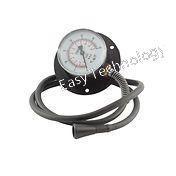
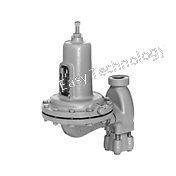
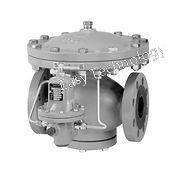
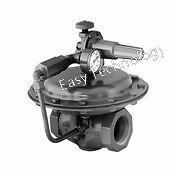
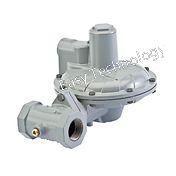
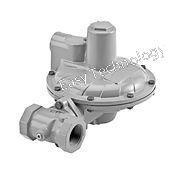
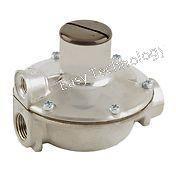
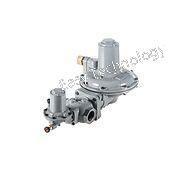
Key Parameters
Category Parameter Name Description & Typical Values
Valve Specifications Valve Size 1/2" to 6" (DN 15 to DN 150) - Extensive size range.
End Connections Flanged (ANSI 125, 150, 200, 300, 600 lbs), Screwed (NPT), Socket Weld.
Body Materials Cast Iron (Std.), Ductile Iron, Carbon Steel, Stainless Steel, and other alloys.
Pressure Ratings Maximum Inlet Pressure Up to 4000 psig (276 bar) for high-pressure bodies. Varies by body type and material.
Outlet Pressure Range (R622/R642) Adjustable via spring. Dozens of spring ranges available, from very low (e.g., 5-50 psig / 0.3-3.4 bar) to very high (e.g., 500-1500 psig / 34-103 bar).
Back-Pressure Setting Range (R652) Adjustable via spring, with a wide selection of ranges similar to the reducing valves.
Internal Parts (Trim) Trim Styles Single-port (Std.) or Cage-style (for guided stability, easy maintenance).
Trim Characteristics Quick Opening (Std.) or Linear & Equal Percentage (available for cage-style trim).
Trim Materials Stainless Steel (Std.), Carbon Steel, Stellite, Hastelloy, etc. Soft Seat (PTFE) option for tight shut-off (Class IV/V).
Diaphragm Material Reinforced Elastomer (NBR std.), PTFE, or Metal.
Performance Flow Characteristic Quick-opening (standard single-port), Linear or Equal Percentage (cage trim).
Leakage Class Class II (metal-to-metal seat, standard). Class IV or V (with optional soft seat).
Temperature Limits Standard: -20°F to 150°F (-29°C to 66°C) with elastomer diaphragm. Up to 1000°F+ (538°C+) with special components (asbestos-free packing, metal diaphragm, etc.).
Key Parameters
Category Parameter Name Description & Typical Values
Valve Specifications Valve Size 3/4", 1", 1-1/4", 1-1/2", 2" NPT
End Connections Screwed (NPT) - Standard
Body Materials Aluminum (Standard for non-corrosive services). Other materials like cast steel or stainless steel may be available.
Pressure Ratings Maximum Inlet Pressure (H722) Up to 5 psig (∼35 kPa). For higher inlet pressures, a primary reducing regulator is required upstream.
Outlet Pressure Range (H722) Adjustable via spring. Various spring ranges are available, typically from 3" H₂O to 60" H₂O (0.75 to 15 kPa).
Pressure Setting Range (H733) Adjustable via spring. Various spring ranges are available, typically from 3" H₂O to 60" H₂O (0.75 to 15 kPa).
Internal Parts Diaphragm Material Neoprene-coated fabric (standard). Other materials like Buna-N or Viton may be available for specific services.
Performance & Environmental Temperature Limits Standard: -20°F to 150°F (-29°C to 66°C). Temperature can affect spring rate and diaphragm life.
Leakage Typically Class II (standard metal seat) or Class IV (with optional soft seat).
Key Parameters
Category Parameter Name Description & Typical Values
Valve Specifications Valve Size 1/2" to 3" (DN 15 to DN 80)
End Connections Flanged (ANSI 125/250/300 lbs), Screwed (NPT), or others
Body Materials Cast Iron, Ductile Iron, Carbon Steel, Stainless Steel
Pressure Ratings Maximum Inlet Pressure Up to 4000 psig (275 bar), depending on size and body material
Outlet Pressure Range Adjustable via spring. Various spring ranges are available, e.g., 3 to 125 psig (0.2 to 8.6 bar), 50 to 300 psig (3.4 to 20.7 bar), etc.
Pressure Class ANSI Class 125, 150, 300, etc.
Internal Parts (Trim) Trim Materials Stainless Steel, Carbon Steel, and other alloys depending on the service.
Diaphragm Material Reinforced Elastomer (e.g., NBR) or PTFE for corrosive services.
Performance & Environmental Flow Characteristic Quick-opening (standard). Other characteristics may be available.
Leakage Class Class II (standard) or Class IV (with soft seat).
Temperature Limits Standard: -20°F to +150°F (-29°C to +66°C) with elastomer diaphragm. Higher temperatures possible with specific materials (e.g., PTFE).
Configurations Control Action Pressure Reducing: Direct-acting (fails to close).
Back-Pressure Relief: Direct-acting (fails to open).
Technical Specifications
Input: Hydrostatic head pressure from liquid level.
Output: Standard pneumatic signal: 3-15 psig (0.2-1.0 bar).
Air Supply: Typically 20 psig (1.4 bar) clean, dry, instrument air.
Accuracy: Typically ±0.5% of span.
Span Ranges: Adjustable over a wide range. Common minimum span is around 25 inH₂O (62 mbar), and maximum span can be several hundred inches of water column.
Materials of Construction:
Case: Aluminum or epoxy-coated cast iron.
Wetted Parts: Stainless steel (standard), Monel, Hastelloy C, and others.
Process Connections: Various options including 2" NPT, 3" NPT, and ANSI flanges.
Typical Applications
The Fisher Type 630 is widely used in industries that rely on pneumatic control or have harsh environments:
Oil & Gas: Level measurement in separators, scrubbers, and storage tanks.
Chemical & Petrochemical: Interface level control in reactors and distillation columns.
Power Generation: Drum level measurement and other boiler applications.
Water & Wastewater: Level monitoring in treatment tanks and sumps.
Pulp & Paper: Chemical level control in various stages of the process.
Technical Specifications
Category Specification
Type Volume Booster Relay, Force-Balance
Input Signal 3 to 15 psig (0.2 to 1.0 bar) standard
Output Signal 1:1 ratio of input, 3 to 15 psig
Air Supply 20 psig (1.4 bar) minimum up to 100 psig (6.9 bar) maximum (depending on model and output pressure required)
Flow Capacity Very high; significantly greater than a standard I/P converter or controller. Specific Cv (Flow Coefficient) values are available in detailed manuals (e.g., Cv ~ 1.4 for a 1/2" NPT model).
Accuracy Typically within ±0.5% of output span (including linearity and hysteresis)
Repeatability Typically ±0.1% of span
Sensitivity Typically ±0.05% of span
Connections 1/4" or 1/2" NPT (National Pipe Thread) female
Body Material Cast Iron (standard, with corrosion protection), Ductile Iron, Aluminum
Diaphragm Material Buna-N (standard)
Technical Specifications
Category Specification
Type Pilot-Operated Back Pressure Regulator / Relief Valve
Models Type 1808: Globe Body
Type 1808A: Angle Body
Service Gas or Liquid
Body Size & Connection 2 Inch NPT (National Pipe Thread)
Maximum Inlet Pressure 150 psig (10.3 bar)
Pressure Setting Range 3 to 125 psig (0.21 to 8.6 bar). Typically achieved with different pilot spring ranges.
Temperature Range -20° to 180°F (-29° to 82°C)
Pilot Connection 1/4 Inch NPT
Approximate Weight Type 1808: 22 lb (10 kg)
Type 1808A: 25 lb (11 kg)
Pilot Types Available for standard relief, differential, vacuum relief, and temperature actuation.
Technical Specifications
Category Specification
Type Self-Operated, Spring-Loaded Pressure Regulator
Models Pressure Reducing: CS221, CS222, CS224
Back-Pressure: CS261
Service Steam, Air, Industrial Gases (e.g., N2, CO2)
Size & Connections 1/2 in. to 2 in. (15 mm to 50 mm)
NPT (Standard) or Flanged (depending on model)
Maximum Inlet Pressure (P1) Up to 400 psig (28 bar) depending on model and body rating
Outlet Pressure (P2) Range Adjustable within a range, e.g., 3 to 125 psig (0.2 to 8.6 bar) or 20 to 200 psig (1.4 to 14 bar), depending on the spring range used.
Temperature Range Standard Diaphragm: -20° to 180°F (-29° to 82°C)
High-Temp. Diaphragm: Up to 406°F (208°C) for steam service
Body Materials Ductile Iron (Standard), Cast Steel, Stainless Steel
Trim Materials Stainless Steel (standard)
Leakage Class ANSI Class IV (Metal Seat) or Class VI (Soft Seat, if equipped)
Technical Specifications
Category Specification
Type Conventional Spring-Loaded, Full-Lift Safety Relief Valve
Service Steam, Air, Gas, and Liquid (depending on specific configuration and certification)
Design & Certification ASME Section VIII (UV Stamp available)
Orifice Size & Area Various sizes from D (0.110 in²) to T (1.838 in²) and larger, per ASME/API standards.
Size & Connections Inlet: 1" to 3" (25 mm to 80 mm)
Outlet: Typically larger than inlet.
Flanged (150# to 600# RF/RTJ) or threaded (NPT) depending on model.
Set Pressure Range Varies widely by orifice size and spring. Available from a few psig up to several hundred psig. Specific spring ranges must be selected.
Temperature Range Standard springs up to 450°F (232°C). High-temperature springs and designs are available for higher temperatures.
Body Materials Carbon Steel (WCB, Standard), Stainless Steel (CF8M), and other alloys.
Trim Materials Stainless Steel (standard)
Adjustable Blowdown Yes, via an external modulated blowdown ring.
Max. Allowable Overpressure 10% for compressible fluids (ASME Code), or 25% for fire case, depending on certification.
Technical Specifications
The following specifications are based on a typical Fisher CSB600 series product data sheet.
Category Specification
Type Pilot-Operated Safety Relief Valve (POSRV)
Service Gas, Vapor, Liquid, and Two-Phase flow
Design & Certification ASME Section VIII (UV Stamp available), API 520
Orifice & Size Various orifice sizes available (e.g., F, G, H, J, etc. per API standards).
Body Sizes: 1" x 2" (D x E) through 4" x 6" (D x E) and larger.
Connections Flanged (150# to 2500# RF/RTJ) is standard.
Set Pressure Range Wide range, typically from 15 psig (1 bar) up to 6000 psig (413 bar) depending on specific pilot and body.
Temperature Range Standard: -20°F to 300°F (-29°C to 149°C)
High-Temp: Available for services up to 1000°F (538°C) with special pilots and design.
Body Materials Carbon Steel (Standard), Stainless Steel, Chrome-Moly, and other alloys.
Pilot Types Standard Relief, Balanced Bellows (for backpressure), Vacuum Relief, Temperature Actuated, Electric Actuation.
Leakage Bubble-tight up to 98% of set pressure.