
 home
home
 Published: May 15, 2026 09:23 AM
 Page View: 109
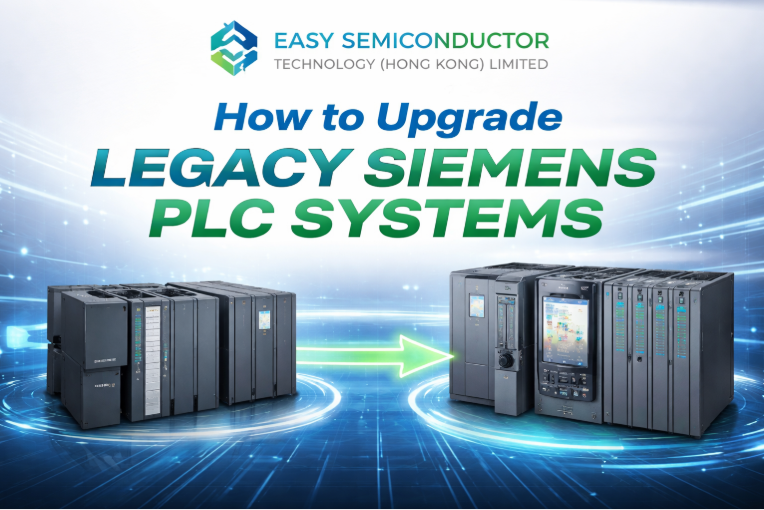
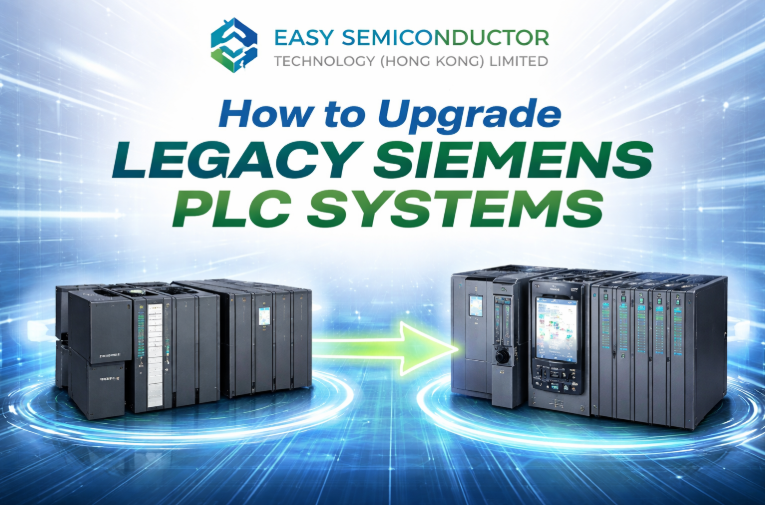
Easy Semiconductor Technology (Hong Kong) Limited is pleased to share practical guidance for industrial facilities looking to upgrade legacy Siemens Programmable Logic Controller (PLC) systems. As manufacturing and industrial processes evolve, maintaining reliable, secure, and efficient automation is essential for competitiveness. Upgrading legacy Siemens PLCs can help facilities improve operational efficiency, enhance safety, and future-proof their control infrastructure.
The Challenge of Legacy Systems
Many industrial plants worldwide continue to rely on older Siemens PLC platforms, including S5, S7-200, or early S7-300 models. While these systems have served their purpose, they often lack modern communication protocols, advanced diagnostics, and integration capabilities with current industrial networks. Challenges include:
Obsolete Hardware and Software: Replacement parts for older PLCs are increasingly scarce, and legacy programming software may not run on modern operating systems.
Limited Connectivity: Legacy systems often cannot integrate with modern Industrial Internet of Things (IIoT) devices or SCADA systems, limiting real-time monitoring and data analytics.
Cybersecurity Vulnerabilities: Older PLCs may lack updated security features, exposing plants to potential cyber threats.
Maintenance Complexity: Troubleshooting and maintaining legacy systems can be time-consuming, requiring specialized knowledge and risking extended downtime.
Step 1: Assessment and Planning
Upgrading a legacy Siemens PLC begins with a comprehensive assessment of the existing system. Plant engineers should document all PLC models, I/O modules, communication networks, and the scope of connected equipment. Understanding the operational criticality of each system component helps prioritize upgrades.
Easy Semiconductor Technology recommends developing a phased upgrade plan, identifying high-risk systems for immediate attention while allowing less critical areas to transition gradually. A clear roadmap minimizes operational disruption and ensures business continuity during the upgrade process.
Step 2: Hardware and Software Modernization
Modern Siemens PLCs, such as the S7-1500 or SIMATIC PCS 7 platform, offer enhanced processing power, advanced I/O modules, and robust connectivity options. Migrating to these platforms allows plants to:
Expand control capabilities to support complex automation tasks.
Integrate with Ethernet/IP, Profinet, and OPC UA for seamless industrial communication.
Leverage modular I/O solutions for easier scalability and maintenance.
Software modernization is equally critical. Upgrading to the latest Siemens TIA Portal ensures compatibility with modern operating systems, enables advanced programming languages, and facilitates centralized project management. Easy Semiconductor Technology emphasizes the importance of backward-compatible migration tools, which help transfer legacy logic to the new platform without introducing operational errors.
Step 3: Data and Process Migration
Migrating process logic and configuration data from legacy PLCs requires careful mapping of input/output addresses, timers, counters, and custom functions. Automated migration tools can simplify this process, but thorough validation and testing are essential. Engineers should simulate operations in a controlled environment before deploying new PLCs to production systems.
Additionally, upgrading to modern Siemens PLCs enables the integration of advanced process monitoring and analytics. Real-time data collection supports predictive maintenance, process optimization, and energy efficiency initiatives, allowing facilities to make data-driven decisions and reduce operational costs.
Step 4: Cybersecurity and Compliance
Legacy PLCs often lack built-in cybersecurity features, leaving plants vulnerable to industrial cyber threats. Modern Siemens PLCs include robust security measures such as secure authentication, encrypted communication, and network segmentation. Upgrading legacy systems allows companies to implement industry-standard cybersecurity frameworks and comply with evolving regulations.
Easy Semiconductor Technology advises facilities to conduct a cybersecurity audit alongside the upgrade process, ensuring that all PLCs, HMIs, and connected devices are protected against potential attacks. Employee training and access control policies complement technical measures, creating a holistic security environment.
Step 5: Training and Change Management
Introducing new PLC platforms involves operational changes. Plant personnel must be trained in programming, maintenance, troubleshooting, and security practices specific to the upgraded system. Easy Semiconductor Technology provides professional training programs and hands-on support to ensure seamless knowledge transfer.
Change management is crucial to minimize resistance and maintain operational continuity. Clear communication, detailed documentation, and phased implementation schedules reduce risks and build confidence among engineering teams.
Conclusion
Upgrading legacy Siemens PLC systems is no longer optional for industrial plants aiming to remain competitive and future-ready. By assessing current systems, modernizing hardware and software, migrating process data, enhancing cybersecurity, and investing in training, facilities can improve reliability, efficiency, and safety.
Easy Semiconductor Technology (Hong Kong) Limited is committed to guiding clients through every stage of the PLC upgrade process. With expert knowledge of Siemens PLC platforms, process automation, and industrial best practices, the company helps industrial operators transition from legacy systems to state-of-the-art automation infrastructure, enabling long-term operational excellence.
About Easy Semiconductor Technology (Hong Kong) Limited
Easy Semiconductor Technology (Hong Kong) Limited is a leading provider of industrial automation solutions, specializing in programmable logic controllers, SCADA systems, and process optimization technologies. Focused on innovation and customer success, Easy Semiconductor Technology delivers tailored solutions to enhance operational efficiency, reliability, and sustainability across diverse industries.