
 home
home
 Published: May 09, 2026 01:16 PM
 Page View: 138
In today’s highly automated industrial environment, the reliability of Industrial Control Systems (ICS) directly determines production efficiency, operational safety, and long-term profitability. Whether in chemical plants, power stations, oil refineries, water treatment facilities, or manufacturing lines, a stable and reliable control system is the foundation of continuous production. Any unexpected failure in PLC, DCS, SCADA, HMI, or field instrumentation can lead to costly downtime, safety incidents, and serious financial losses.
Easy Semiconductor Technology (Hong Kong) Limited has extensive experience in industrial automation maintenance, control system troubleshooting, and emergency recovery solutions. Based on years of practical engineering service, improving the reliability of industrial control systems requires a comprehensive strategy involving preventive maintenance, power management, environmental protection, redundancy design, spare parts planning, and professional technical support.
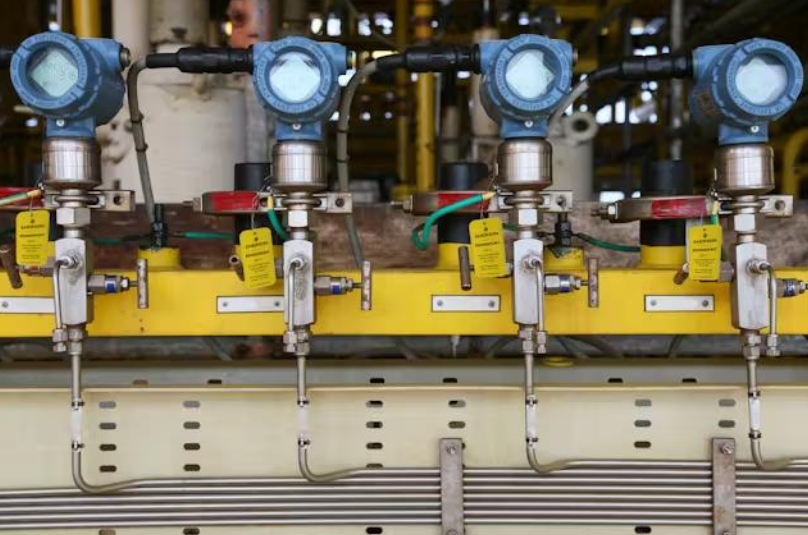
Preventive maintenance is the first and most effective step to improve system reliability. Many enterprises still rely on reactive maintenance—repairing equipment only after failure occurs. This approach often results in unplanned shutdowns and expensive emergency repairs.
A well-designed preventive maintenance plan includes regular inspection of PLC modules, DCS controllers, communication networks, I/O cards, power supplies, UPS systems, and operator stations. Key indicators such as temperature, voltage stability, signal quality, and communication integrity should be monitored continuously.
Routine cleaning of control cabinets, terminal connections, and cooling systems can also prevent dust accumulation, overheating, and oxidation, which are common hidden causes of system failure.
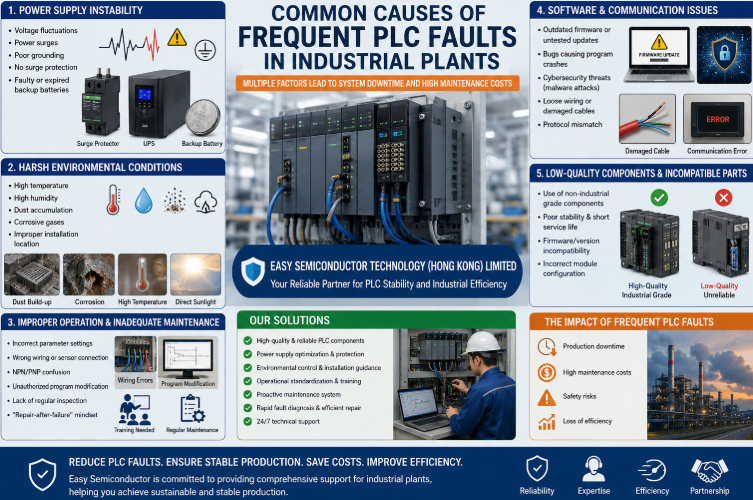
Power supply instability is one of the most common causes of industrial control system failures. Voltage fluctuations, power surges, harmonic distortion, and grounding issues can seriously damage PLC and DCS modules.
Installing high-quality UPS systems, voltage stabilizers, surge protection devices, and isolated grounding systems can significantly reduce electrical risks. Critical control cabinets should have independent power protection to prevent external equipment from affecting system stability.
Regular testing of grounding resistance and power quality analysis should be included in maintenance schedules to identify hidden electrical risks before they cause equipment failure.
Industrial environments are often harsh, with high temperatures, humidity, dust, vibration, and corrosive gases posing continuous threats to control system components.
Maintaining proper environmental conditions inside control rooms and electrical cabinets is essential. Air conditioning systems, cabinet cooling fans, dust-proof sealing, humidity control, and anti-corrosion protection should all be properly managed.
For field-installed devices, waterproof, explosion-proof, and corrosion-resistant enclosures may be necessary depending on the application environment.
Temperature control is particularly critical because excessive heat can shorten the lifespan of CPUs, power modules, communication cards, and other sensitive electronics.
For critical production processes, system redundancy is not a luxury—it is a necessity. Single-point failures can cause total plant shutdown if redundancy is not implemented.
Redundant architecture may include dual PLC CPUs, redundant DCS controllers, backup communication networks, dual power supplies, redundant servers, and mirrored operator stations. Hot standby systems allow seamless switching when primary equipment fails, minimizing downtime.
Although redundancy increases initial investment, it significantly reduces operational risk and long-term maintenance costs.
Industries such as petrochemical, pharmaceutical, and power generation especially benefit from redundancy strategies due to their high requirements for continuous operation.
A major reason for prolonged downtime is the lack of available spare parts. When a critical module fails and replacement parts are unavailable, production losses can increase rapidly.
Enterprises should establish a strategic spare parts inventory for high-risk and critical components such as CPU modules, power supplies, communication cards, I/O modules, HMI panels, and specialized sensors.
Obsolete or discontinued parts require special attention. For older systems, advance procurement and refurbishment planning are often necessary because original manufacturers may no longer provide support.
Easy Semiconductor Technology (Hong Kong) Limited helps customers source rare and obsolete industrial automation components to ensure fast recovery during emergencies.
Modern industrial control systems are increasingly connected to enterprise networks, remote monitoring platforms, and cloud-based maintenance systems. While this improves efficiency, it also introduces cybersecurity risks.
Reliable industrial communication requires both physical stability and network security. Ethernet switches, fiber communication modules, industrial routers, and protocol gateways must be regularly inspected and maintained.
Cybersecurity measures such as firewalls, network segmentation, access control, secure remote access, and firmware updates are essential to prevent cyberattacks that may disrupt production.
Communication network failures are often overlooked until serious operational interruptions occur.
Even the most advanced automation systems depend on skilled personnel for operation and maintenance. Inadequate technical knowledge often leads to misdiagnosis, delayed repairs, and incorrect troubleshooting.
Regular training programs for maintenance engineers should cover PLC programming basics, DCS architecture, network diagnostics, alarm management, backup procedures, and emergency response protocols.
Standardized troubleshooting procedures reduce human error and improve maintenance efficiency during critical situations.
Technical documentation, backup files, wiring diagrams, and system recovery plans should always be kept updated and accessible.
When major failures occur, rapid response from experienced technical experts can make the difference between a short interruption and a major production disaster.
Professional service providers offer emergency diagnostics, board-level repairs, spare parts supply, on-site commissioning, and system recovery services that internal teams may not be able to handle quickly.
Easy Semiconductor Technology (Hong Kong) Limited specializes in industrial control system repair, DCS emergency recovery, PLC troubleshooting, and preventive maintenance solutions for global industrial customers.
Our engineering team helps enterprises reduce downtime, extend equipment lifespan, and improve long-term system reliability through fast, practical, and cost-effective technical support.
Improving the reliability of industrial control systems is not achieved through a single action but through a systematic and long-term management strategy. Preventive maintenance, stable power supply, environmental control, redundancy design, spare parts planning, network security, personnel training, and professional technical support all play critical roles.
As industrial automation becomes more complex, reliability becomes increasingly valuable. Investing in system reliability is not simply a maintenance expense—it is a strategic decision that protects productivity, safety, and profitability.
For enterprises seeking stable production and reduced operational risk, a reliable industrial control system is the true foundation of sustainable growth.