
 home
home
 Published: May 09, 2026 01:29 PM
 Page View: 138
In modern industrial automation environments, Programmable Logic Controllers (PLCs) serve as the backbone of production control systems. They coordinate machinery, regulate processes, and ensure operational precision across manufacturing, energy, chemical, and infrastructure sectors. However, despite their robust design, many industrial plants continue to experience frequent PLC faults that disrupt production efficiency and increase maintenance costs.
Easy Semiconductor Technology (Hong Kong) Limited has conducted extensive field analysis across multiple industries and identified several key factors contributing to recurring PLC failures. Understanding these root causes is essential for improving system reliability and minimizing downtime in high-demand industrial environments.
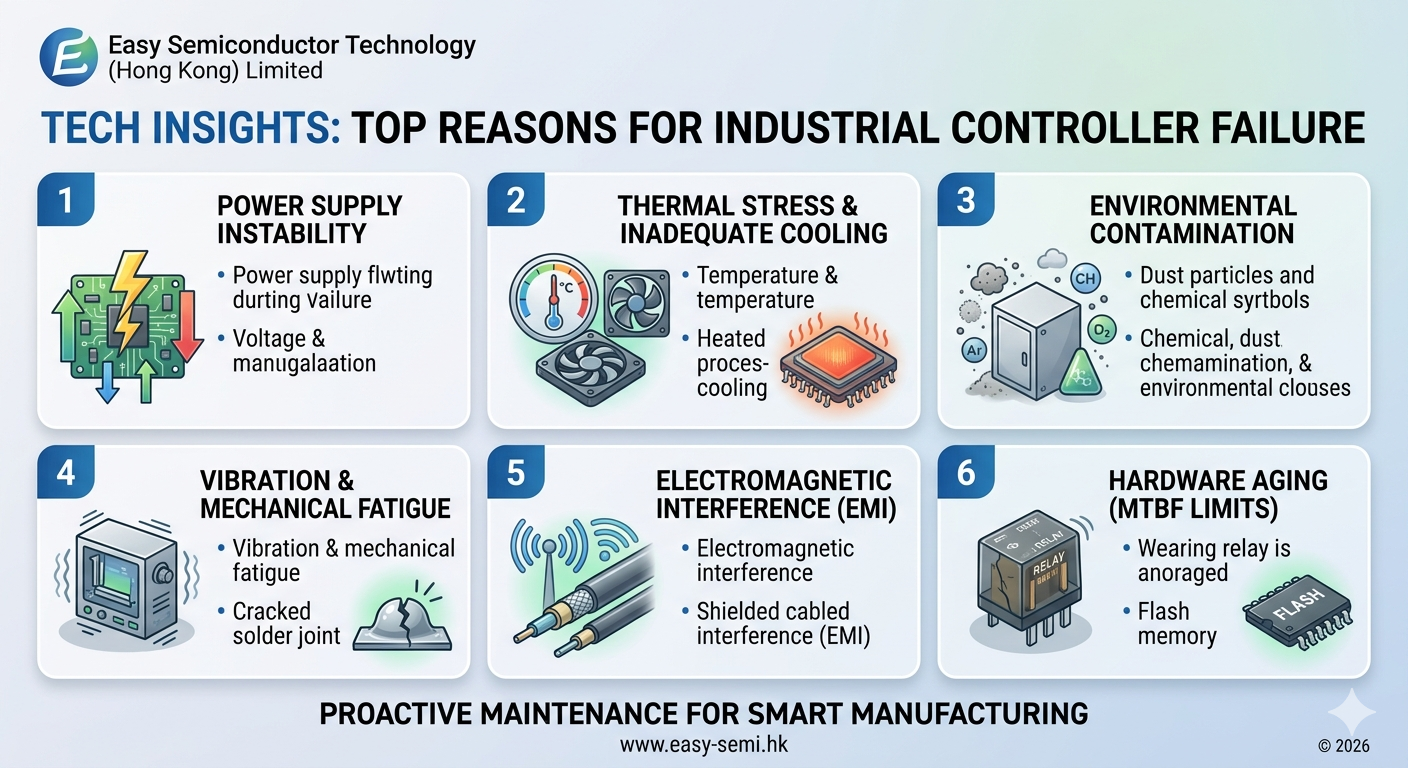
One of the most common reasons for PLC faults is unstable power supply conditions. Industrial facilities often operate heavy machinery that creates sudden load fluctuations, voltage spikes, and electrical noise. These disturbances can directly impact PLC power modules and internal circuits.
In many cases, transient overvoltage caused by large motor startups or grid switching operations can damage sensitive PLC components. Similarly, undervoltage conditions may cause system resets, memory corruption, or communication interruptions.
Poor grounding practices further aggravate these issues by allowing electromagnetic interference (EMI) to enter the control system. Over time, repeated exposure to unstable power conditions significantly reduces PLC lifespan.
PLC systems are frequently deployed in environments that expose them to extreme heat, humidity, dust, and vibration. Chemical plants, steel factories, and mining operations are particularly challenging environments for electronic control systems.
Excessive temperature can degrade internal components such as capacitors and processors, while high humidity may lead to condensation and short circuits. Dust accumulation inside control cabinets can obstruct ventilation and cause overheating.
Vibration from nearby heavy machinery can loosen connectors or damage solder joints, leading to intermittent faults that are difficult to diagnose.
Modern PLC systems rely heavily on industrial communication protocols such as Modbus, Profibus, Ethernet/IP, and Profinet. Communication failures are therefore a major source of system downtime.
These failures often arise from:
Faulty network cables or connectors
Improper shielding against electromagnetic interference
IP address conflicts or misconfigured network parameters
Excessive network traffic causing data congestion
In complex industrial plants with multiple PLCs and distributed control systems (DCS), even a minor communication disruption can cascade into widespread operational issues.
Another significant cause of PLC faults is improper programming or configuration. PLC logic programs must be carefully designed to match specific industrial processes. Errors in ladder logic, timing sequences, or input/output mapping can lead to unpredictable system behavior.
Common issues include:
Incorrect sensor calibration values
Faulty interlocking logic
Poorly optimized scan cycles
Inadequate error handling routines
In many cases, these issues are introduced during system upgrades or maintenance by personnel who lack full understanding of the original control architecture.
Like all electronic systems, PLC hardware has a limited operational lifespan. Over time, components such as relays, power supplies, and memory modules degrade naturally.
Aging PLC systems may exhibit symptoms such as:
Random system resets
Delayed response times
Data loss or corruption
Reduced communication stability
Plants that continue operating legacy PLC systems without timely upgrades are particularly vulnerable to unexpected failures.
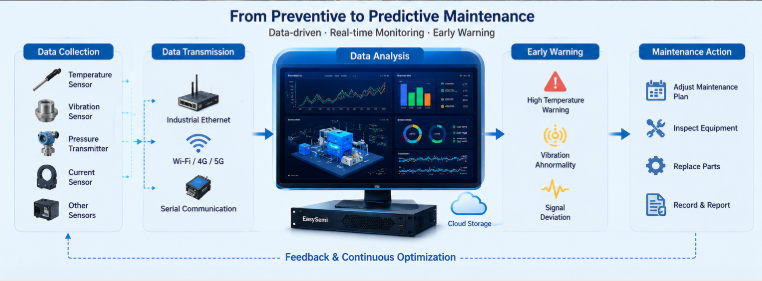
One of the most overlooked factors contributing to PLC faults is the absence of a structured preventive maintenance program. Many industrial plants adopt a reactive maintenance approach—fixing issues only after failures occur.
Without regular inspection, cleaning, firmware updates, and performance diagnostics, minor issues can gradually develop into major system failures. Dust accumulation, loose wiring, and outdated firmware are often ignored until they cause production downtime.
Despite advances in automation, human intervention remains a critical factor in PLC system reliability. Incorrect handling during maintenance, improper wiring, or accidental parameter changes can all trigger system faults.
In high-pressure industrial environments, operators may also bypass safety interlocks or override system alarms, increasing the risk of control system instability.
Frequent PLC failures can have severe consequences for industrial operations, including:
Production line stoppages
Financial losses due to downtime
Safety hazards for personnel and equipment
Reduced product quality consistency
Increased maintenance and repair costs
For industries such as petrochemicals, power generation, and semiconductor manufacturing, even a few minutes of downtime can translate into significant economic impact.
As a specialized provider of industrial automation solutions, Easy Semiconductor Technology (Hong Kong) Limited emphasizes a proactive approach to PLC reliability. Based on extensive field experience, the company recommends a multi-layered strategy that includes:
Stable and well-grounded power infrastructure
Environmental protection for control cabinets
Regular network diagnostics and communication testing
Structured preventive maintenance schedules
Continuous training for engineering and maintenance personnel
Lifecycle management and timely PLC upgrades
The company also provides rapid fault diagnosis and recovery solutions designed to minimize downtime and restore system functionality efficiently.
Frequent PLC faults in industrial plants are rarely caused by a single factor. Instead, they result from a combination of electrical instability, environmental stress, communication issues, programming errors, equipment aging, and insufficient maintenance practices.
By identifying and addressing these root causes, industrial operators can significantly improve system reliability and operational efficiency. With the support of experienced solution providers such as Easy Semiconductor Technology (Hong Kong) Limited, industries can move toward more stable, intelligent, and resilient automation systems that meet the demands of modern production environments.