
 home
home
 Published: May 25, 2026 09:35 AM
 Page View: 106
The global semiconductor industry is entering a new era of innovation driven by artificial intelligence, advanced automation, smart factories, and next-generation materials. As demand for high-performance chips continues to rise across automotive, telecommunications, consumer electronics, and industrial automation sectors, manufacturers are rapidly adopting emerging technologies to improve production efficiency, precision, and scalability. According to industry analysts, semiconductor manufacturing investments are expected to remain strong through 2026 as companies race to meet growing global demand for advanced integrated circuits.
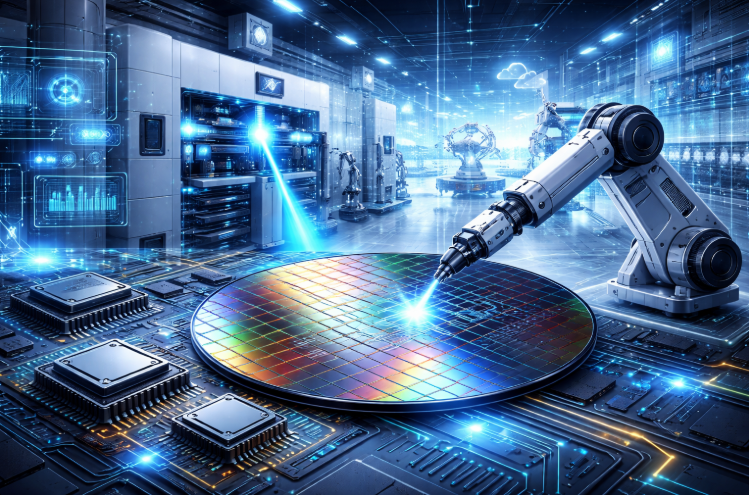
Semiconductor fabrication has always been one of the most complex manufacturing processes in the world. Producing advanced chips requires nanometer-level precision, cleanroom environments, and highly sophisticated equipment. However, traditional manufacturing methods are no longer sufficient to support the increasing complexity of modern chip architectures. Emerging technologies are now reshaping every stage of semiconductor production, from wafer fabrication to final testing and packaging.
One of the most influential technologies transforming semiconductor manufacturing is artificial intelligence (AI). AI-powered analytics systems are helping manufacturers optimize production lines, predict equipment failures, and reduce process variability. By analyzing large volumes of real-time production data, AI algorithms can identify subtle defects before they become major quality issues. This predictive capability significantly reduces waste, minimizes downtime, and improves overall yield rates.
Machine learning is also enhancing predictive maintenance strategies across semiconductor fabs. Instead of relying on scheduled maintenance intervals, manufacturers can now monitor equipment conditions continuously and perform maintenance only when necessary. This approach helps reduce operational costs while improving equipment reliability. Advanced AI systems can detect abnormal vibration patterns, temperature changes, or pressure fluctuations in critical tools such as lithography machines and etching systems.
Automation and robotics are another major force driving transformation in semiconductor manufacturing. Modern fabrication plants increasingly rely on autonomous material handling systems and robotic wafer transport solutions. These automated systems improve production speed while minimizing contamination risks associated with human interaction. Collaborative robots, or cobots, are also being integrated into backend assembly and testing operations to improve flexibility and efficiency.
The rise of smart factories is accelerating digital transformation throughout the semiconductor sector. Smart manufacturing technologies combine Industrial Internet of Things (IIoT) sensors, cloud computing, and real-time analytics to create highly connected production environments. Semiconductor fabs can now monitor thousands of process variables simultaneously and make instant adjustments to maintain optimal production conditions. Digital twin technology is also gaining popularity, allowing manufacturers to simulate production environments virtually before implementing process changes on the factory floor.
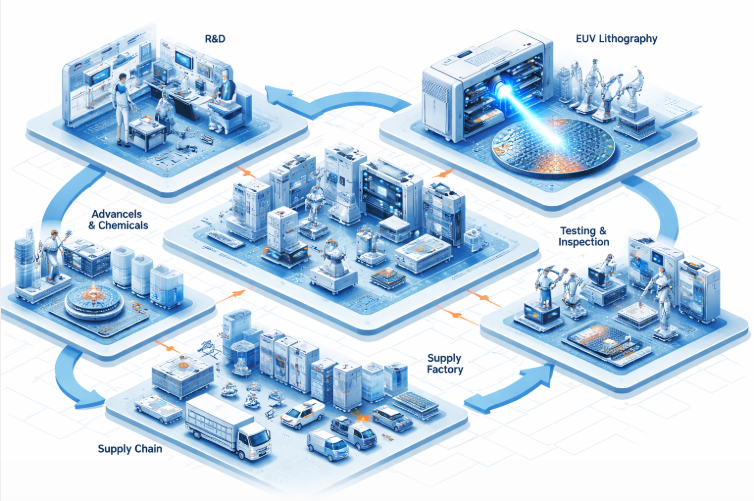
Advanced lithography technologies continue to push the boundaries of semiconductor miniaturization. Extreme ultraviolet (EUV) lithography has become a critical enabler for producing advanced chips below the 7nm process node. EUV systems use extremely short wavelengths of light to create smaller and more complex transistor structures. Although these systems require substantial investment, they enable manufacturers to achieve higher transistor density, improved performance, and lower power consumption.
In addition to lithography advancements, new semiconductor materials are playing an increasingly important role in next-generation chip manufacturing. Traditional silicon remains dominant, but materials such as gallium nitride (GaN) and silicon carbide (SiC) are rapidly expanding in power electronics applications. These advanced materials offer superior thermal conductivity, higher efficiency, and improved performance in high-voltage environments. As electric vehicles, renewable energy systems, and industrial automation applications continue to grow, demand for wide-bandgap semiconductors is expected to increase significantly.
Advanced packaging technologies are also revolutionizing the semiconductor industry. Traditional chip scaling approaches are becoming more challenging and expensive, leading manufacturers to focus on innovative packaging solutions such as 2.5D and 3D chip stacking. These technologies improve performance by placing multiple chips closer together, reducing signal latency and enhancing energy efficiency. Heterogeneous integration allows different types of semiconductor components to be combined into a single package, creating powerful solutions for AI computing, data centers, and high-performance electronics.
Sustainability has become another major focus area in semiconductor manufacturing. Semiconductor fabs consume large amounts of energy and water, prompting manufacturers to invest in greener production technologies. Smart energy management systems, water recycling solutions, and low-emission manufacturing processes are helping companies reduce environmental impact while maintaining operational efficiency. Many global semiconductor manufacturers are now prioritizing carbon reduction initiatives and renewable energy adoption as part of their long-term sustainability strategies.
Cybersecurity is also becoming increasingly important as semiconductor manufacturing systems become more connected. Smart factories generate enormous amounts of sensitive production data that must be protected from cyber threats. Manufacturers are implementing advanced cybersecurity frameworks, encrypted communication systems, and AI-driven threat detection technologies to secure critical infrastructure and intellectual property.
Supply chain resilience remains a key priority for semiconductor companies worldwide. Recent global disruptions highlighted the importance of diversified sourcing strategies and localized manufacturing capabilities. Emerging digital supply chain technologies are helping companies improve visibility, forecasting accuracy, and inventory management. Blockchain-based traceability systems are also being explored to improve transparency and ensure product authenticity across the semiconductor ecosystem.
The growing demand for AI chips, automotive semiconductors, and high-performance computing devices will continue driving innovation across the semiconductor manufacturing industry. Companies that embrace advanced automation, AI analytics, smart manufacturing, and sustainable production technologies will be better positioned to remain competitive in the evolving global market.
As semiconductor technology continues to advance, collaboration between equipment suppliers, chip manufacturers, and technology providers will become increasingly important. Strategic investments in research, workforce development, and digital transformation will shape the future of semiconductor production over the next decade.
Emerging technologies are no longer optional for semiconductor manufacturers seeking long-term growth and operational excellence. They are becoming essential tools for achieving higher productivity, improved quality, and greater manufacturing flexibility in an increasingly competitive global industry. With continuous innovation reshaping the sector, semiconductor manufacturing is poised to enter a new generation of intelligent, connected, and highly efficient production.