
 home
home
 Published: May 23, 2026 01:22 PM
 Page View: 115
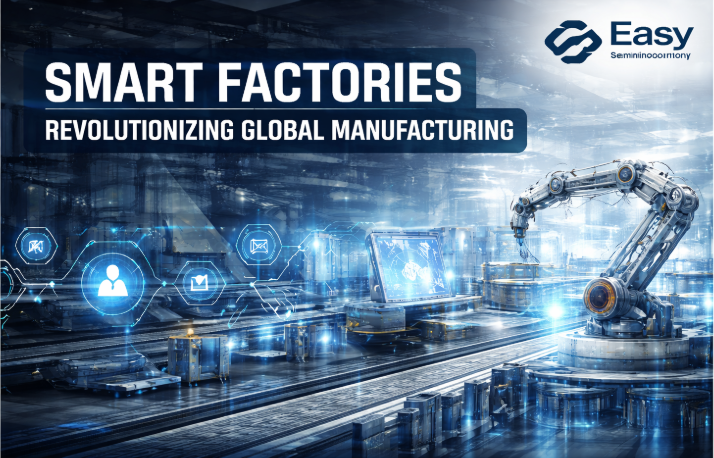
In the rapidly evolving landscape of global manufacturing, the concept of the “smart factory” has transitioned from futuristic vision to practical reality. Driven by advancements in the Industrial Internet of Things (IIoT), artificial intelligence (AI), robotics, and data analytics, smart factories are redefining the way products are designed, produced, and delivered. These intelligent manufacturing facilities are not only boosting efficiency but also reshaping supply chains, sustainability practices, and global competitiveness.
The Rise of Smart Factories
Traditional factories often operate with rigid, manual processes, leaving them vulnerable to inefficiencies, production bottlenecks, and quality inconsistencies. Smart factories, by contrast, leverage interconnected systems that continuously monitor and adjust operations in real-time. Sensors, embedded devices, and intelligent machines communicate seamlessly to optimize production workflows. According to industry analysts, manufacturers that embrace smart factory principles can achieve up to 25% higher operational efficiency and a 20% reduction in production costs compared to conventional setups.
Data-Driven Manufacturing
At the heart of smart factories lies data. Every machine, sensor, and operational unit generates massive streams of information that, when analyzed, provide actionable insights. Predictive maintenance, for example, enables manufacturers to anticipate equipment failures before they occur, reducing downtime and extending machinery lifespan. Similarly, AI-driven quality control systems can detect defects in real-time, ensuring products meet exacting standards and minimizing waste. The ability to harness this data transforms decision-making from reactive to proactive, empowering manufacturers to respond swiftly to market demands.
Integration of Robotics and Automation
Automation has long been a cornerstone of modern manufacturing, but smart factories elevate it to a new level. Collaborative robots, or cobots, work alongside human operators, performing repetitive or dangerous tasks with precision and consistency. Automated guided vehicles (AGVs) transport materials across the production floor efficiently, while robotic arms handle assembly with unmatched accuracy. These technologies not only enhance productivity but also improve worker safety and allow human talent to focus on higher-value activities such as design, problem-solving, and innovation.
Sustainability and Energy Efficiency
In addition to operational advantages, smart factories play a pivotal role in advancing sustainability. Intelligent energy management systems monitor power consumption, optimize machine usage, and reduce waste. For instance, adaptive lighting, heating, and cooling systems adjust automatically based on real-time production schedules and environmental conditions. Furthermore, digital twin simulations enable manufacturers to test new production methods virtually, minimizing material waste and environmental impact before implementing changes on the physical shop floor. As regulatory pressures and consumer demand for sustainable products grow, smart factories provide a pathway to greener manufacturing.
Global Supply Chain Transformation
The benefits of smart factories extend beyond individual plants, influencing global supply chains. Real-time visibility across production networks allows companies to track shipments, anticipate disruptions, and optimize inventory levels. By integrating suppliers, logistics partners, and distributors into a connected ecosystem, manufacturers can achieve greater agility and resilience. This interconnected approach not only enhances efficiency but also strengthens global competitiveness, particularly in industries such as electronics, automotive, and semiconductors, where precision and timing are critical.
Challenges and Considerations
Despite the numerous advantages, implementing smart factory solutions comes with challenges. High upfront investment costs, workforce training requirements, and cybersecurity risks remain significant concerns for manufacturers. Successful deployment requires careful planning, a phased approach, and collaboration with technology providers. Companies that invest strategically in digital infrastructure and cultivate a culture of innovation are best positioned to unlock the full potential of smart manufacturing.
Looking Ahead
The trajectory of global manufacturing is clear: smart factories are no longer optional but essential for companies seeking long-term competitiveness. As technology continues to advance, these intelligent facilities will become even more autonomous, efficient, and responsive. For manufacturers worldwide, the adoption of smart factory principles represents an opportunity to drive innovation, sustainability, and profitability simultaneously.
Easy Semiconductor Technology (Hong Kong) Limited remains at the forefront of supporting this transformation, delivering cutting-edge automation solutions, industrial IoT integration, and consulting expertise to help manufacturers navigate the complexities of modern production. By embracing smart factories, businesses can redefine what is possible in global manufacturing, ushering in a new era of efficiency, resilience, and innovation.