
 home
home
 Published: May 09, 2026 12:53 PM
 Page View: 137
In today’s rapidly evolving industrial automation environment, maintaining the stable operation of programmable logic controllers (PLCs) has become increasingly important for manufacturers worldwide. As factories continue integrating intelligent control systems, Industrial Internet of Things (IIoT) devices, and high-density electrical cabinets, overheating issues in PLC systems are becoming more common. Excessive heat can shorten equipment lifespan, reduce operational reliability, and even trigger unexpected production shutdowns.
According to Easy Semiconductor Technology (Hong Kong) Limited, preventing PLC overheating is no longer just a maintenance task — it is now a critical strategy for improving industrial efficiency, equipment safety, and long-term operational stability.
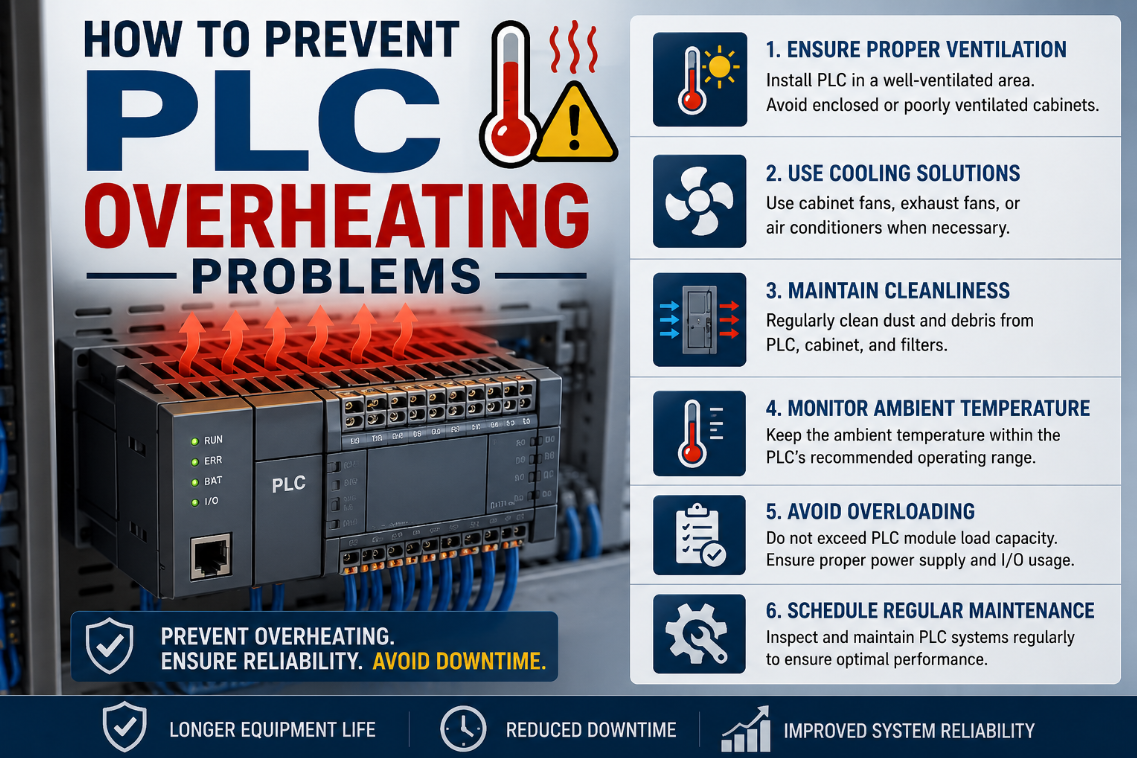
PLC overheating typically occurs when internal temperatures exceed the manufacturer’s recommended operating range. While industrial PLC systems are designed to withstand challenging environments, prolonged exposure to high temperatures can damage CPUs, I/O modules, communication cards, and power supplies.
Several common causes contribute to PLC overheating problems:
Industrial control cabinets often contain multiple heat-generating devices such as PLCs, VFDs, relays, power supplies, and industrial PCs. Without proper airflow, heat accumulates rapidly inside enclosed panels.
Dust buildup on cooling fans, heat sinks, and ventilation filters restricts airflow and traps heat. Manufacturing sectors such as cement, mining, textile, and chemical processing are particularly vulnerable.
Using undersized power supplies or operating PLC systems beyond their designed capacity can create excessive thermal stress.
Factories operating in tropical climates, steel mills, oil & gas facilities, or outdoor installations often experience elevated ambient temperatures that directly affect PLC performance.
Placing heat-sensitive PLC modules too close to high-power equipment like inverters, servo drives, or transformers can significantly increase thermal exposure.
When PLC systems overheat, manufacturers may encounter:
Unexpected production downtime
CPU communication failures
I/O signal instability
Program execution errors
Premature module aging
Increased maintenance costs
Safety hazards in critical production lines
In industries such as pharmaceuticals, petrochemicals, food processing, and semiconductor manufacturing, even a short PLC interruption can lead to major financial losses.
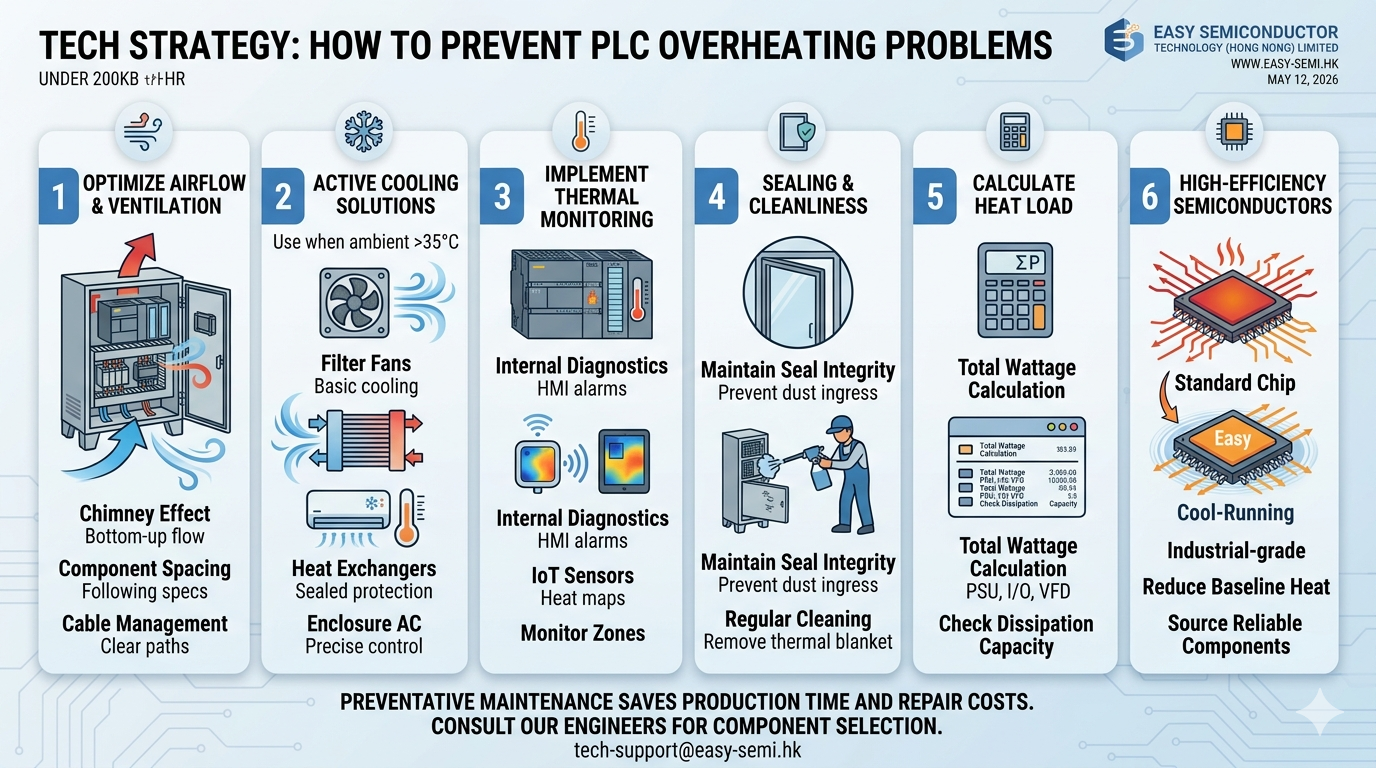
One of the most effective solutions is improving enclosure ventilation. Engineers should ensure sufficient airflow using:
Cooling fans
Air conditioners for electrical cabinets
Heat exchangers
Ventilation filters
Proper cable routing to reduce heat concentration
Separating high-power devices from sensitive PLC components can also improve thermal management.
Modern automation systems increasingly use smart temperature monitoring devices integrated directly into PLC networks. Real-time thermal monitoring allows maintenance teams to identify abnormal heat conditions before failures occur.
Many industrial facilities now implement predictive maintenance strategies using temperature sensors connected through SCADA or DCS platforms.
Routine cleaning remains essential. Maintenance personnel should regularly inspect:
Cooling fans
Ventilation ducts
Cabinet filters
Terminal connections
Heat sinks
Dust accumulation is one of the most overlooked causes of overheating in industrial control systems.
Not all PLC hardware performs equally under extreme industrial conditions. Choosing industrial-grade modules designed for wide operating temperature ranges can significantly improve system reliability.
Global manufacturers increasingly prioritize high-quality automation brands for mission-critical applications in energy, manufacturing, and transportation sectors.
Engineers can minimize thermal buildup by:
Using energy-efficient power supplies
Reducing unnecessary relay loads
Optimizing wiring design
Distributing heat-generating devices properly
Advanced thermal simulation software is also being adopted during panel design stages to improve airflow efficiency.
As Industry 4.0 technologies continue expanding, PLC systems are handling larger amounts of data, faster communication protocols, and more complex automation tasks. This evolution increases internal processing demands and overall heat generation.
Industrial experts believe thermal management will become a central focus in next-generation smart manufacturing facilities. AI-driven predictive diagnostics, remote condition monitoring, and intelligent cooling systems are expected to reshape industrial maintenance strategies over the next decade.
According to industry specialists at Easy Semiconductor Technology (Hong Kong) Limited, companies investing in proactive PLC cooling and preventive maintenance can significantly reduce downtime risks while improving operational continuity and equipment lifespan.
The increasing modernization of industrial facilities worldwide has accelerated demand for reliable PLC modules, industrial power supplies, communication interfaces, and automation spare parts. Manufacturers are seeking trusted suppliers capable of supporting both legacy systems and new smart factory upgrades.
As a professional supplier of industrial automation products, Easy Semiconductor Technology (Hong Kong) Limited continues supporting global customers with industrial control system components, PLC modules, DCS systems, HMI solutions, servo drives, industrial networking products, and automation spare parts for multiple industries including oil & gas, manufacturing, power generation, marine, and semiconductor sectors.
With industrial automation environments becoming more demanding, preventing PLC overheating is no longer optional — it is essential for maintaining safe, stable, and efficient production operations worldwide